
Building a FinTech app sounds exciting. But many founders quickly face a serious challenge. Costs start increasing faster than expected.
FinTech startups need strong security from day one. They also need scalable systems that can handle growth. At the same time, they must control budgets and avoid unnecessary spending.
Many teams struggle to balance all three. They either overspend on development or compromise on performance and security. Poor planning often leads to higher fintech app development costs and delays in scaling.
CTOs and product managers often ask the same question.
How do you build a secure fintech application without burning your budget?
The answer starts with the right approach. You need to focus on scalable fintech app development from the beginning. You also need to follow fintech app security best practices without overcomplicating the system.
Early-stage teams building an MVP must stay lean. Scale-up FinTech companies must optimize their existing systems. Investors also expect platforms that show strong scalability and cost control.
In this guide, you will learn how to build a fintech app that stays secure, scales smoothly, and keeps costs under control. You will also understand how to reduce fintech development cost with smarter decisions, better architecture, and the right technology choices.
If you are planning fintech app development for startups or looking to improve your current system, this will help you build smart without overspending.
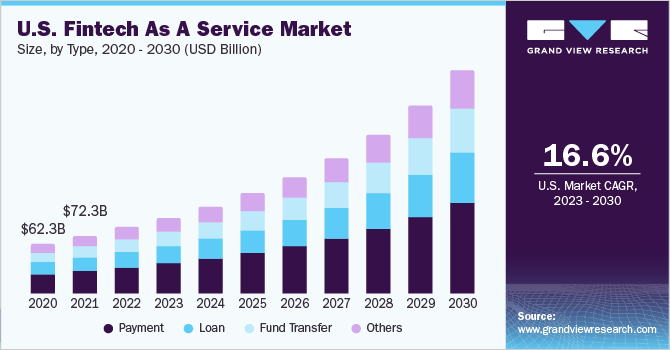
Source: grandviewresearch
The global FinTech-as-a-Service market was valued at USD 266.56 billion in 2022 and is expected to reach USD 949.49 billion by 2030, growing at a CAGR of 17.5% from 2023 to 2030. This growth is driven by rising demand for seamless and user-friendly digital financial services across consumers and businesses.
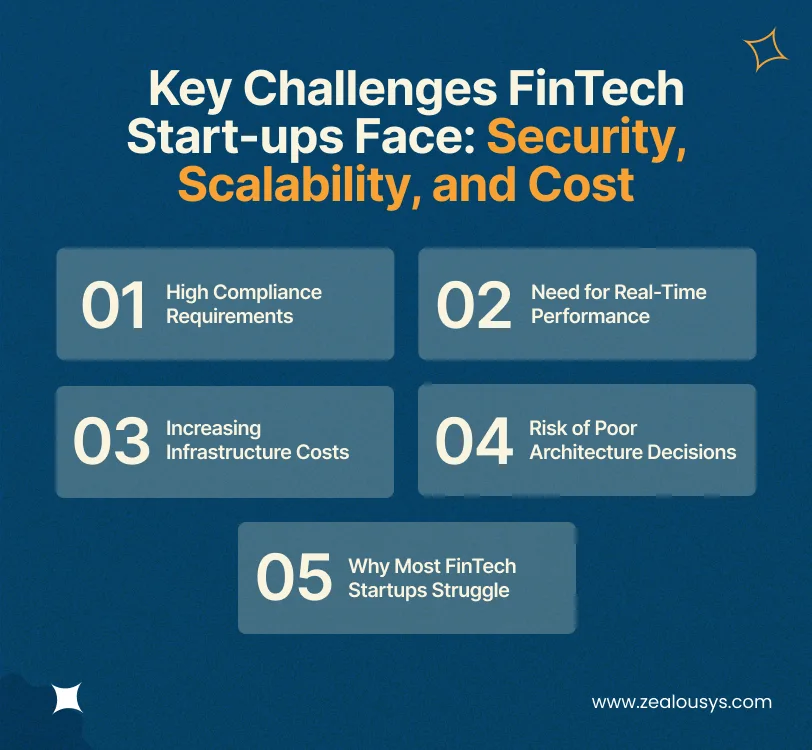
FinTech startups move fast. But building a secure and scalable product without increasing costs is not easy.
Many founders focus on launching quickly. They often ignore long-term scalability and security in the early stage. This decision increases fintech app development cost later.
Let’s break down the key challenges.
FinTech apps handle sensitive financial data. Startups must follow strict regulations like data protection and payment security standards.
Many teams do not plan compliance from day one. They try to fix security later. This approach increases mobile app development time and cost.
Secure fintech application development requires a strong foundation. If you ignore it early, you will pay more later.
Users expect fast and seamless transactions. A small delay can break trust.
Startups often build MVPs without focusing on performance. The system works fine with a few users. But it starts failing when traffic increases.
Scalable fintech app development requires planning for growth from the beginning. Without it, performance issues become expensive to fix.
Cloud helps startups launch faster. But poor planning increases costs quickly.
Many teams overuse resources. They do not optimize usage. They pay for infrastructure they do not fully use.
Cost optimization in fintech apps plays a key role. Smart cloud usage can reduce fintech development cost significantly.
Architecture defines how your product grows.
Many startups choose the wrong tech stack. They build systems that do not scale. They face constant rework.
Scalable financial software architecture helps you avoid this problem. It supports growth without increasing complexity or cost.
Most startups try to balance speed, security, and cost at the same time. This creates confusion.
They either:
This leads to higher fintech app development for startups cost and slower growth.
Building a fintech app is not just about development. It requires the right strategy, architecture, and cost planning from the start.
Startups that plan early can build secure, scalable apps without burning a budget.
Building a FinTech product looks exciting. Many startups move fast to launch. But small mistakes in the early stage increase fintech app development cost later.
Let’s look at the most common mistakes and how you can avoid them.
Many startups try to build a full product from day one. They add too many features without validating the idea.
This approach increases fintech app development cost and delays launch. It also makes fintech MVP development more complex than needed.
You should focus on core features first. You should validate your idea with a simple version. This helps you control budget and build a scalable fintech app step by step.
Security is critical in fintech application development. Many startups treat it as a later phase.
This creates serious risks. It affects user trust and compliance. Fixing security issues later also increases cost.
You should follow fintech app security best practices from the beginning. You should secure APIs, encrypt data, and plan compliance early.
Secure fintech application development is not optional. It is a foundation.
Startups often choose cloud services without a clear plan. They over-provision resources or ignore optimization.
This leads to high fintech app development cost and wasted budget.
You should plan cloud usage carefully. You should use auto-scaling and pay-as-you-go models. This helps in cost optimization in fintech apps.
Smart infrastructure decisions support scalable fintech app development.
Many startups build systems that work for today but fail tomorrow.
They ignore scalable financial software architecture. They rely on rigid designs that cannot handle growth.
This creates performance issues when users increase.
You should design your system for scale from day one. You should use modular architecture and API-first design. This makes it easier to scale fintech applications without high cost.
The wrong tech stack creates long-term problems. It slows development and increases app maintenance cost.
Some startups choose trendy technologies instead of practical ones. Others ignore long-term scalability.
You should choose technologies that support secure fintech application development and scalability. You should align your stack with business goals.
The right decisions here reduce fintech development cost and improve performance.
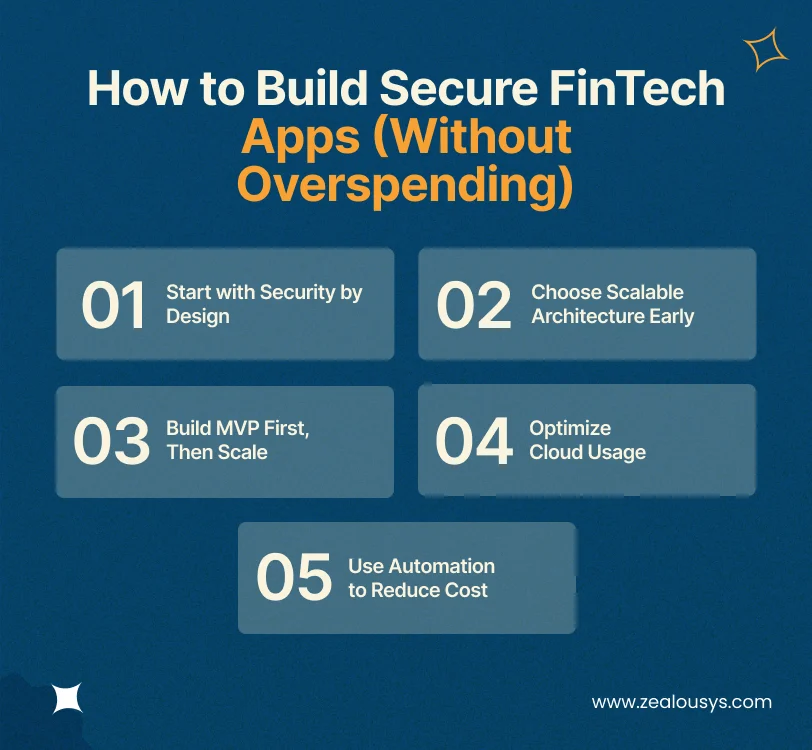
FinTech startups need to balance three things from day one. You need strong security. You need scalable fintech app development. You also need to control your fintech app development cost.
Many teams fail because they treat these goals separately. Smart teams handle them together from the start.
Here is a practical approach that works.
You should never treat security as an add-on. You should build it into your product from day one.
Start with data encryption. Protect sensitive financial data both in transit and at rest. This step builds trust and reduces future risks.
You can use secure APIs. Your fintech application will depend on multiple integrations. Secure APIs protect your system from unauthorized access.
Follow basic compliance standards like PCI DSS and GDPR. These are essential for secure fintech application development. They also help you avoid legal and financial issues later.
When you focus on fintech app security best practices early, you avoid expensive fixes in the future.
Your architecture decides your future cost.
Many startups choose quick solutions. That decision creates problems later.
You should evaluate microservices vs monolith based on your product needs. Microservices support scalable fintech app development. They also allow you to scale specific features without increasing overall cost.
Follow an API-first approach. This makes your product flexible and easy to integrate with third-party services like payment gateways.
Design a modular system. This helps you update or scale parts of your system without affecting the entire platform.
A strong foundation supports scalable financial software architecture and keeps your long-term costs under control.
Do not try to build everything at once.
Start with a fintech MVP development approach. Focus only on core features that solve your users’ main problem.
Launch faster. Collect feedback. Validate your idea in the real market.
This approach helps you reduce fintech development costs. It also prevents you from investing in features that users may not need.
Once you validate your product, you can scale with confidence.
Cloud costs can increase quickly if you do not manage them properly.
You can use a pay-as-you-go model. You only pay for what you use. This helps you control your fintech app development cost.
Implement auto-scaling. Your system should handle traffic spikes without wasting resources during low usage.
Avoid over-provisioning. Many startups pay for unused capacity. You should align your infrastructure with real usage.
Smart cloud planning plays a big role in cost optimization in fintech apps.
Manual processes slow down your team and increase cost.
Set up CI/CD pipelines. This helps you release updates faster and with fewer errors.
Use automated testing. This ensures your product stays secure and stable without increasing manual effort.
Implement monitoring tools. These tools help you detect issues early and avoid major failures.
Automation improves speed, reduces errors, and supports scalable fintech app development.
Many FinTech startups think they need a bigger budget to scale. In reality, the right approach helps you reduce fintech development cost while improving performance.
A FinTech startup approached Zealous System with a common challenge. Their platform was growing fast. Their user base increased every month. But their fintech app development cost also kept rising.
Their system handled secure transactions, but it struggled with performance during peak usage. Their cloud infrastructure consumed more resources than required. Their team also spent extra time managing issues instead of building new features.
Zealous System analyzed their system and identified key gaps in scalable fintech app development and infrastructure usage.
The team optimized their architecture using a scalable financial software architecture approach. They improved API performance and secured data flow with best practices for secure fintech application development. They also implemented better cloud management to avoid overuse of resources.
Instead of increasing the budget, Zealous System focused on cost optimization in fintech apps.
The results were clear and measurable.
This approach helped the startup build a secure fintech app without overspending. It also created a strong foundation for future growth.
If you are planning fintech app development for startups, you do not need to spend more to scale. You need the right strategy, the right architecture, and the right partner.
Smart decisions early in fintech MVP development can save a significant cost later.
Choosing the right tech partner can directly impact your FinTech product success. Startups often struggle with security, scalability, and fintech app development cost. The right partner helps you manage all three efficiently.
Zealous System helps FinTech startups build secure fintech applications with strong security practices from day one. This approach reduces risk and avoids costly fixes later.
The team focuses on scalable fintech app development. They design systems that grow with your users using modern scalable financial software architecture. This helps you scale without increasing costs.
Zealous System also supports fintech MVP development. The team helps you launch faster, validate your idea, and reduce unnecessary spending.
If you want to build a secure and scalable product without overspending, choosing the right partner makes all the difference.
Building a FinTech app does not have to increase your costs. You can create a secure fintech application and still keep your budget under control with the right approach.
Many startups struggle because they ignore scalability and security early. This leads to higher fintech app development cost later. A smarter way is to focus on fintech MVP development, strong architecture, and continuous optimization from the start.
If you are a founder or CTO, you should aim for scalable fintech app development with built-in security and cost efficiency. Zealous System helps FinTech startups build secure, scalable apps while reducing development and operational costs.
The cost of fintech app development depends on your features, security needs, and scalability goals. A simple fintech MVP development can cost less because it focuses on core features. A full-scale platform with advanced security, integrations, and compliance requirements will cost more.
Many FinTech startup founders and CTOs often overspend because they build too much too early. You can reduce fintech development cost by starting with the right scope and scalable architecture.
If you plan smartly, you can control your fintech app development cost without compromising quality.
You should always start secure fintech application development from day one. Security should never come later.
You need to use data encryption, secure APIs, and strong authentication methods. You should also follow fintech app security best practices like compliance with PCI DSS and GDPR where required.
Product managers and technical teams should focus on secure payment app development and regular security testing. You should also monitor your system continuously.
A secure foundation helps you avoid costly risks in the future.
You should choose a scalable financial software architecture that supports growth from the beginning.
Most startups prefer microservices because it allows flexibility and easy scaling. You can also use an API-first approach to connect multiple services smoothly.
If your goal is scalable fintech app development, you should avoid tightly coupled systems. A modular structure helps you scale specific features without increasing overall cost.
The right architecture helps you grow without rebuilding your system later.
The timeline depends on your product scope and complexity.
A fintech MVP development usually takes around 3 to 6 months. A more advanced platform with integrations, security layers, and compliance requirements can take 6 to 12 months or more.
Early-stage startup teams should focus on launching faster with a validated product. This approach helps you test the market before making bigger investments.
A clear roadmap always speeds up development.
You can reduce fintech development cost by making smarter decisions early.
You should start with an MVP instead of building a full product. You should optimize your cloud usage and avoid over-provisioning. Automation can also reduce manual effort and long-term costs.
You should choose the right fintech software development company that understands cost optimization and scalability.
Zealous System helps FinTech startups build secure and scalable apps with a cost-efficient approach.
If you plan your architecture and development strategy properly, you can scale your fintech app without burning your budget.
Our team is always eager to know what you are looking for. Drop them a Hi!

Pranjal Mehta is the Managing Director of Zealous System, a leading software solutions provider. Having 10+ years of experience and clientele across the globe, he is always curious to stay ahead in the market by inculcating latest technologies and trends in Zealous.


Comments