It’s easy to get excited about AI. A new model launches, a demo goes viral, and suddenly everyone wants an “AI strategy.” The harder question comes later, once the excitement fades: how do you turn all that capability into something that actually works for a business?
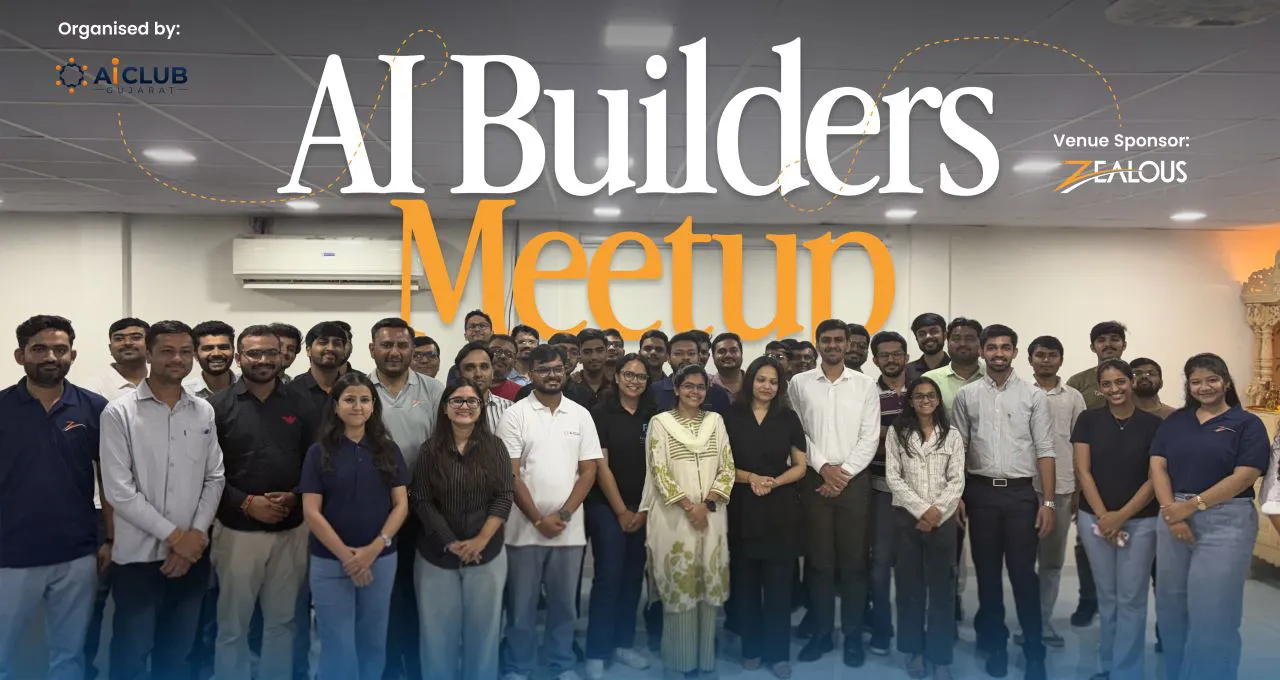
That question ran quietly through the AI Builder Meetup organized by AI Club Gujarat on October 10, 2026. We were glad to host it at Zealous System. Developers, founders, marketers, and researchers came together for a morning of talks and conversation, and what made it interesting was the range. One talk covered building AI systems, one covered getting them noticed, and one covered using AI to make better decisions.
At first, they seemed like three separate topics. By the end of the morning, they felt like three chapters of the same story.
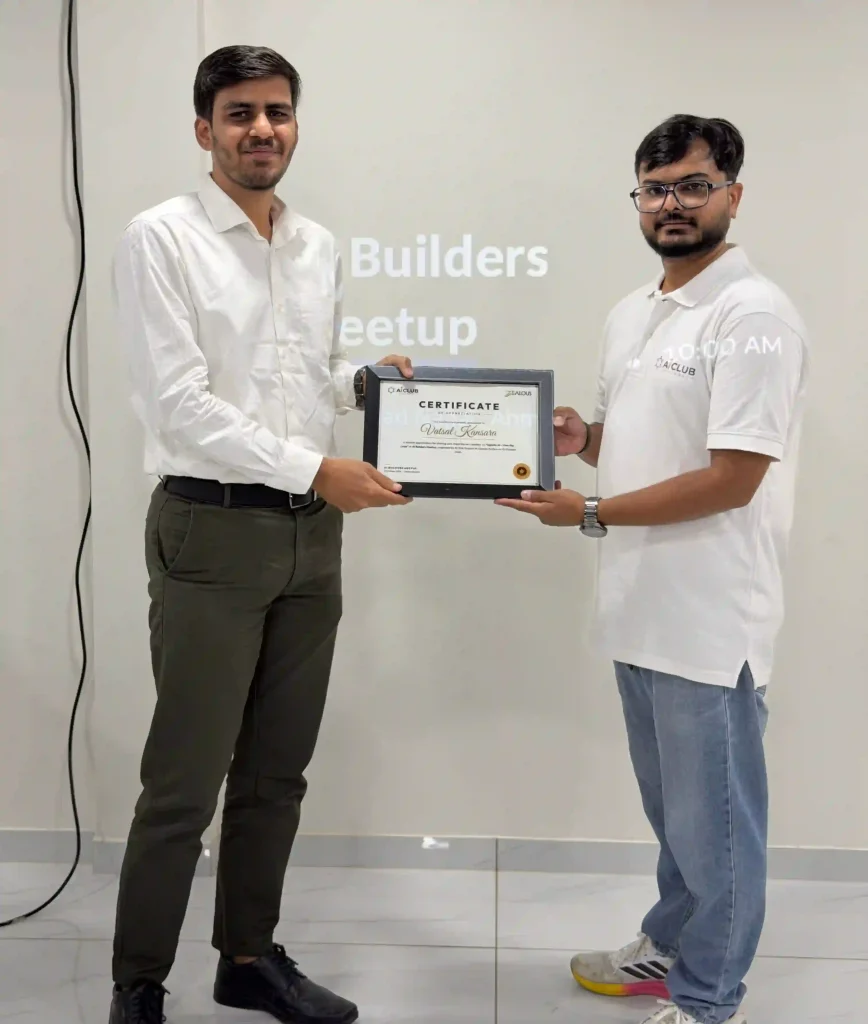
The first session came from Vatsal Kansara, Director of AI at LinkMD.AI, and it went straight to one of the most talked-about ideas in tech right now: AI agents.
Agents promise a lot. Instead of answering a single question, they can take on multi-step tasks, connect to other tools, and work through problems with some independence. It’s no surprise that so many businesses want one.
But anyone who has tried to build an agent knows the gap between a slick demo and a dependable system. A demo only has to work once, in front of an audience. A production system has to work every day, on messy real-world inputs, inside workflows that people depend on.
Vatsal’s talk lived in that gap. He looked at what sits around the model: the architecture of the system, the context it has access to, how it connects with other tools, and above all the problem it’s meant to solve. He also covered choosing the right AI stack, a decision that’s easy to make based on hype and expensive to get wrong.
The message for anyone building with AI was simple but important. The model is only one piece. What decides whether an agent is useful is how well the whole system fits the work it’s meant to do.
Once you’ve built something good, there’s a problem engineers often underestimate: nobody knows it exists.
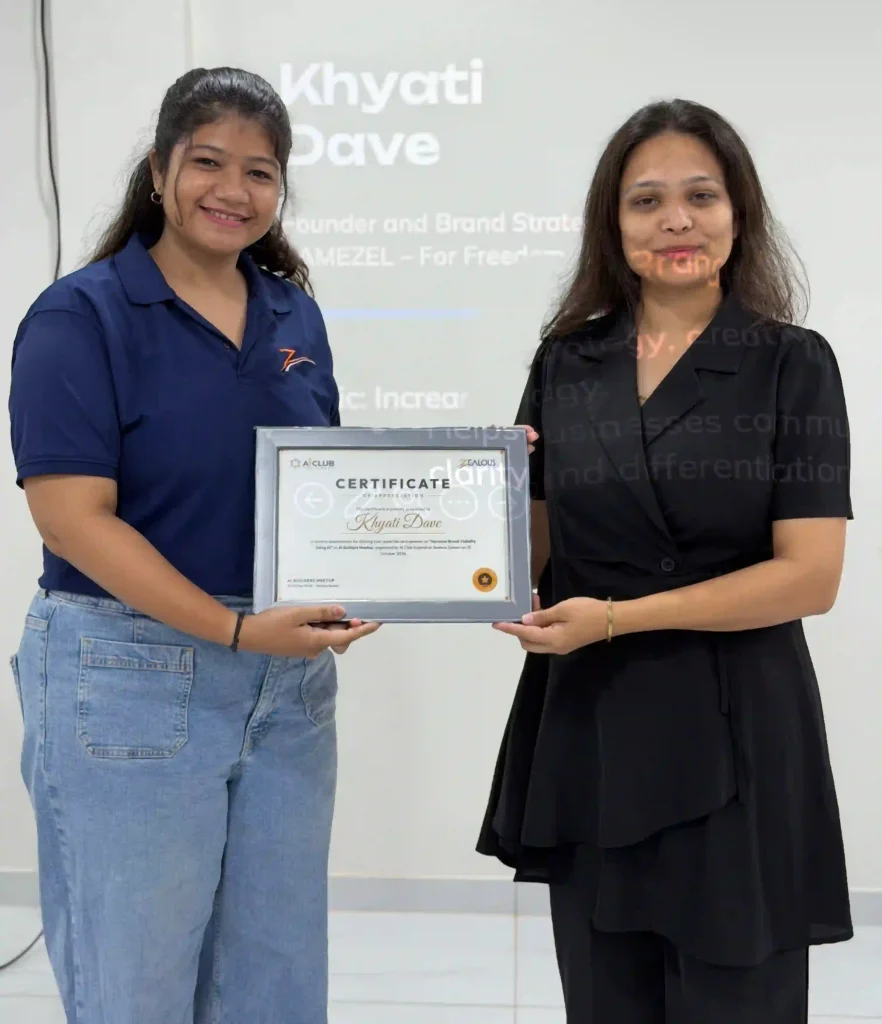
Khyati Dave, Founder and Brand Strategist at FAMEZEL, took the conversation in that direction, and her topic is quickly becoming urgent. The way people discover products is changing. Search engines and review sites used to be the starting point. Now, more and more people simply ask an AI assistant to research options, compare tools, or recommend a solution.
That shift raises new questions for businesses. When someone asks an AI tool about your category, does your brand come up? If it does, is it described accurately? Do your strengths come through, or do you blur into a list of similar competitors?
Khyati’s session focused on brand visibility in this AI-driven world. She looked at how companies position their products, communicate their expertise, and build recognition when the competition for attention is fiercer than ever. Her underlying point resonated with many in the room, especially the founders: creating value is only half the job. Communicating it clearly is the other half, and that half is changing fast.
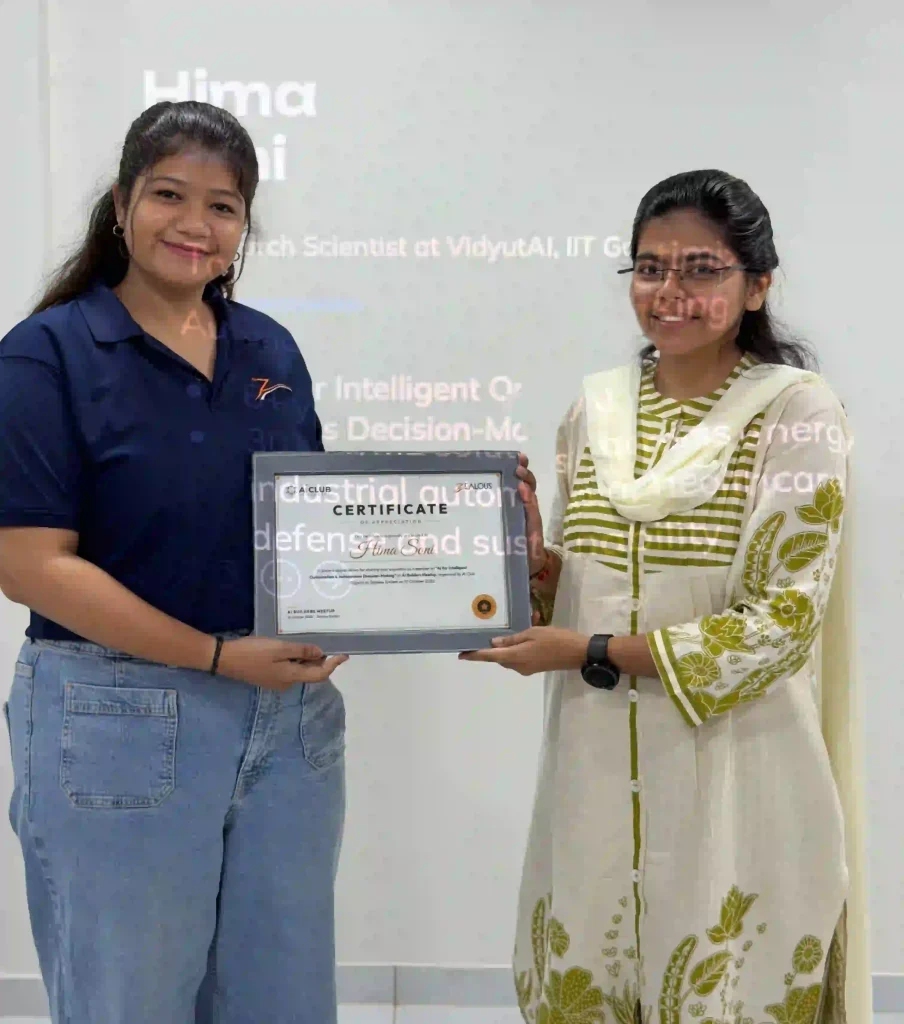
The final session, from Hima Soni, AI Research Scientist at VidyutAI, IIT Gandhinagar, widened the lens on what AI is for.
Most public conversation about AI centers on chatbots, content generation, and coding assistants. Those are useful, but they’re only one corner of the field. Many of the most valuable problems in business aren’t about generating text at all. They’re about making decisions: choosing among many possibilities, working within real constraints, and finding the best course of action when there are too many variables for a person to weigh by hand.
Hima explored intelligent optimization and autonomous decision-making, bringing a research perspective that grounded the morning in something more rigorous. These techniques apply wherever decisions are complex, frequent, or high-stakes, places where AI can evaluate alternatives faster and more consistently than manual analysis.
For businesses, the takeaway was to look beyond the obvious uses. The biggest gains from AI may come from quietly improving the decisions that shape day-to-day operations, rather than from the most visible applications.
Looking back on the morning, the three sessions form a natural sequence.
First, you build something that solves a real problem and holds up outside a demo. Then you make sure the people who need it can find it and understand why it matters. And throughout, you look for places where AI can improve how decisions are made, with a clear business goal to measure it against.
Skip any one of these and the rest suffer. A technically impressive system without a clear purpose goes nowhere. A useful product that nobody discovers might as well not exist. And an AI project without a meaningful objective is hard to justify, however clever it is.
That’s probably the most valuable idea we took away: getting from “experimenting with AI” to “applying AI well” isn’t purely a technical challenge. It takes builders, communicators, and researchers, people who rarely end up in the same room.
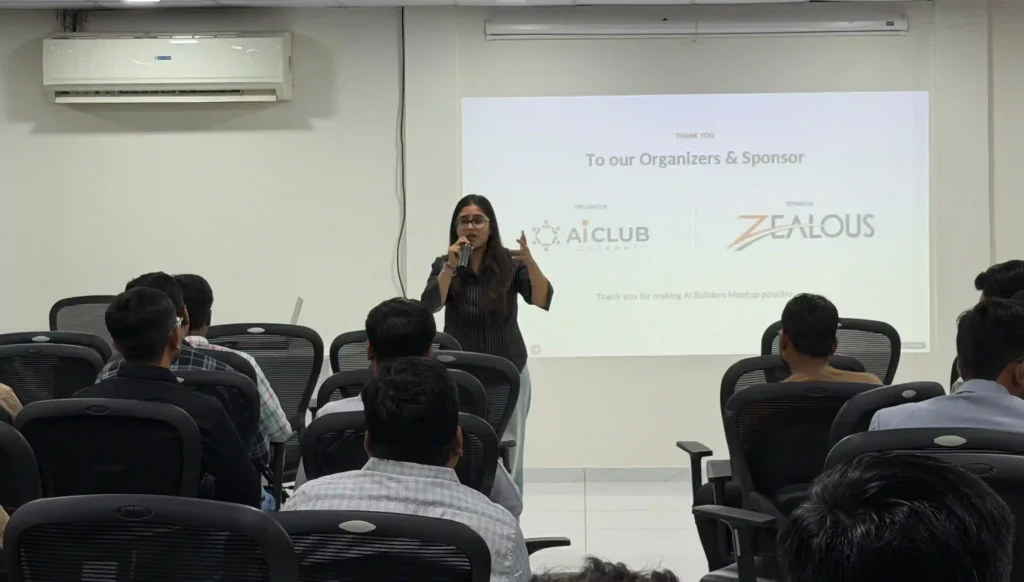
That’s also why events like this one are worth showing up for. A developer can learn a lot from a brand strategist’s view of how products get discovered. A founder can find new opportunities in research that seemed academic. And a researcher can see firsthand which problems businesses are trying to solve.
Ahmedabad’s AI community is growing, and spaces where these perspectives meet will only become more valuable as the technology keeps moving.
Our sincere thanks to AI Club Gujarat for organizing the meetup and building a space for the community to connect. Thank you to Vatsal Kansara, Khyati Dave, and Hima Soni for sharing their insights, and to everyone who joined us and made the conversations so engaging.
At Zealous System, we’re already looking forward to the next one, and to more conversations with the people shaping AI in Ahmedabad and beyond.
Our team is always eager to know what you are looking for. Drop them a Hi!

Meet the Zealous Team – your dedicated source for cutting-edge insights on the latest technologies, digital transformation, and industry trends. With a passion for innovation and a commitment to delivering unparalleled expertise.


Comments