
The insurance industry no longer runs on paperwork, long email chains, and delayed approvals. Customers now expect fast digital experiences where they can manage policies, submit claims, track renewals, and make payments online without depending on agents for every small task.
That shift has increased demand for insurance portal development across health insurance, life insurance, auto insurance, and enterprise insurance providers.
Modern insurance portal software helps insurers simplify operations, improve customer engagement, automate workflows, and deliver self-service experiences from a single platform.
Whether you want to build a customer portal, broker portal, claims management system, or a complete insurance ecosystem, choosing the right insurance portal solutions can directly improve operational efficiency and customer satisfaction.
Insurance portal software is a centralized digital platform that allows customers, agents, brokers, and administrators to manage insurance-related activities online.
A modern insurance web portal usually includes:
Instead of relying on manual processes, insurers use insurance portal solutions to automate communication, improve accuracy, and provide 24/7 digital access to users.
For customers, the portal becomes a self-service platform. For insurance providers, it becomes a powerful operational system that improves productivity and reduces administrative workload.
Insurance portal development focuses on creating secure, scalable, and user-friendly digital systems that simplify insurance operations.
Here’s how a typical insurance portal software solution works:
Users create accounts and securely log in using passwords, OTP verification, biometric authentication, or multi-factor authentication.
Customers can:
This improves transparency and reduces dependency on support teams.
One of the biggest advantages of insurance portal software development is automated claims processing.
Users can:
This process reduces delays and improves customer trust.
Insurance portals integrate secure payment gateways that allow customers to:
Modern insurance portal solutions often include:
These features improve customer experience and reduce support costs.

Insurance companies invest in custom insurance portal software development because it improves efficiency, customer retention, and operational visibility.
Insurance portal software automates repetitive tasks such as:
Automation reduces manual errors and speeds up internal operations.
Customers expect digital-first insurance experiences.
Insurance web portal development helps businesses offer:
This improves engagement and long-term customer loyalty.
Manual insurance operations consume time and resources.
Insurance portal solutions reduce:
This helps insurers optimize operational expenses.
Modern insurance portal software includes analytics dashboards that help insurers track:
These insights help businesses improve services and increase profitability.
Successful insurance portal development requires features that improve both customer experience and internal operations.
A self-service insurance portal allows users to:
This feature reduces support dependency significantly.
An advanced claims module should support:
Policy management features help users:
Insurance portal software should support secure online transactions with:
AI and analytics help insurers identify:
Insurance web portal development should support integration with:
Security remains critical in insurance portal software development.
Essential security features include:
Insurance portal development delivers major business benefits, but companies often face technical and operational challenges during implementation.
Understanding these challenges early helps insurers build scalable and future-ready insurance portal software solutions.
Many insurance companies still use legacy systems for policy management, underwriting, customer records, and claims processing.
Connecting modern insurance portal software with outdated infrastructure can become complicated.
Solution
Start with a detailed technology audit before development begins.
Identify:
An experienced insurance portal development company can build middleware and APIs that simplify software integration with CRM, ERP, CMS, and third-party platforms.
Custom insurance portal software development requires investment in:
Without proper planning, costs can increase quickly.
Solution
Build an MVP first with essential features.
Launch core functionalities such as:
Then scale the insurance portal solution gradually based on user feedback and business goals.
Insurance teams often resist new digital workflows because employees feel comfortable with traditional processes.
This slows down implementation.
Solution
Provide:
Automation also helps employees adapt faster by reducing repetitive manual work.
Insurance portal software handles sensitive customer information, including:
Poor security can damage customer trust and create compliance issues.
Solution
Implement:
Security should remain a core part of insurance web portal development from day one.
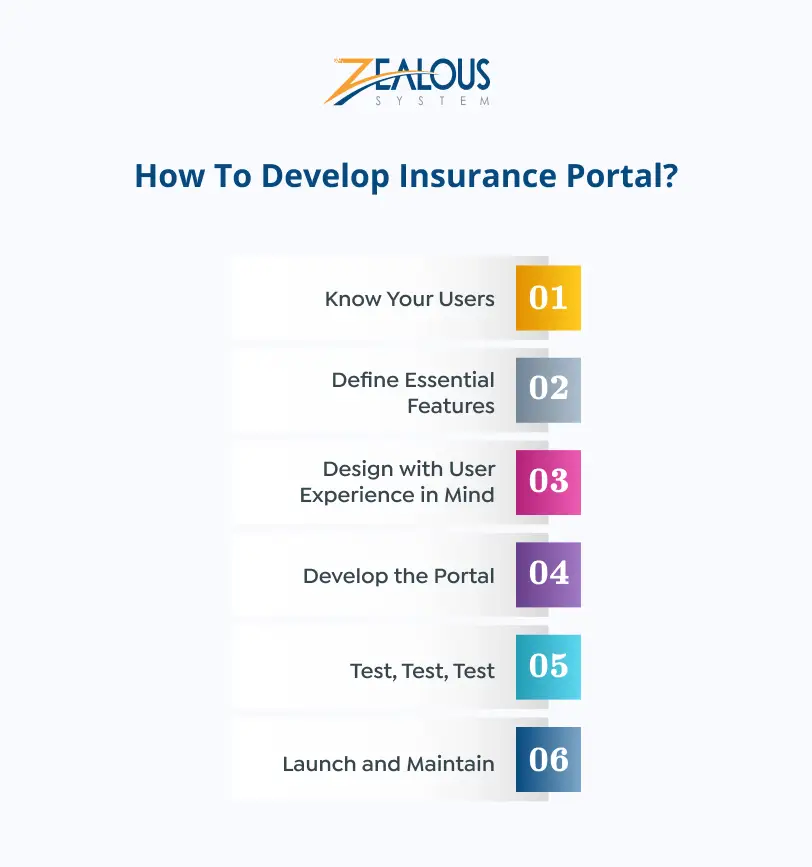
Building successful insurance portal software requires careful planning, user-focused design, and scalable architecture.
Here’s a step-by-step insurance portal development process businesses can follow.
Start by identifying your primary users.
These may include:
Study their:
Create user personas and customer journey maps before starting development.
This step helps you build insurance portal solutions that solve real business problems.
Choose features based on business goals and user needs.
Key insurance portal software features usually include:
Avoid feature overload during the initial launch.
Focus on usability and operational efficiency first.
UI/UX directly affects portal adoption rates.
Users expect fast, simple, and mobile-friendly experiences.
During the design phase:
A clean user experience improves engagement and customer satisfaction.
Businesses usually choose between:
Custom development offers:
For growing insurance businesses, custom insurance portal solutions often deliver better ROI.
During development, software engineers build:
The portal should integrate smoothly with:
Strong integration improves operational efficiency across departments.
Software testing ensures the portal performs smoothly before launch.
Teams should conduct:
Real-user feedback helps identify usability gaps early.
After deployment, monitor:
Use analytics and customer feedback to improve the platform continuously.
Successful insurance portal development is an ongoing process, not a one-time launch.
Every insurance business operates differently.
Ready-made platforms often limit customization, scalability, and workflow flexibility.
Custom insurance portal software development allows businesses to build solutions tailored to their:
Custom insurance portal software also supports:
This flexibility gives insurers a long-term competitive advantage in custom software development.
The future of insurance portal software development will focus heavily on AI, automation, and personalized digital experiences.
Key trends include:
Businesses investing early in modern insurance portal solutions will adapt faster to changing customer expectations.
Insurance portal development has become essential for insurance companies that want to improve efficiency, automate workflows, and deliver better customer experiences.
Modern insurance portal software helps businesses simplify:
With the right insurance web portal development strategy, businesses can reduce operational costs, improve customer retention, and scale faster in a competitive market.
Companies that invest in custom insurance portal software development today position themselves for long-term digital growth tomorrow.
Our team is always eager to know what you are looking for. Drop them a Hi!

I am currently working as a business analyst at Zealous System. I am experienced in working with stakeholders and managing project requirements, Documentation of requirements, and planning of product backlog.


Comments