Germany’s growing digital economy is encouraging businesses across industries to invest in mobile app development. From fintech and healthcare to logistics, retail, and manufacturing, companies are building mobile apps to improve customer engagement, automate operations, and stay competitive in a digital-first market. As demand for on-demand services and mobile experiences continues to rise, mobile applications have become an essential part of business growth strategies in Germany.
German businesses are also focusing on scalable, secure, and GDPR-compliant mobile applications that support long-term digital transformation. Modern apps are no longer limited to basic functionality. Companies now expect features like AI-powered automation, real-time analytics, enterprise integrations, and personalized user experiences to improve operational efficiency and customer satisfaction.
One of the most common questions businesses ask is: “How much does it cost to build a mobile app in Germany?” The answer depends on factors such as app complexity, features, platform choice, integrations, UI/UX design, and security requirements.
In this guide, we’ll break down mobile app development costs in Germany, including pricing factors, timelines, hidden costs, and the latest app development trends shaping the market in 2026.
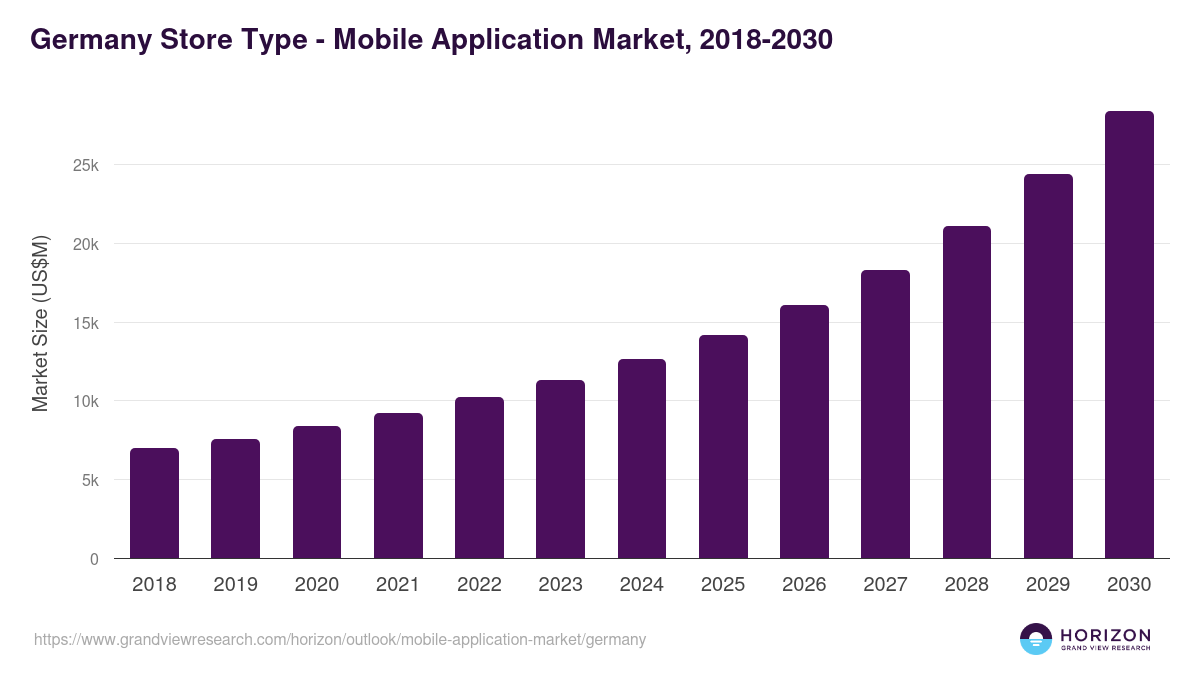
As per Grand View Research, The mobile application market in Germany is expected to reach a projected revenue of US$ 28,412.0 million by 2030. A compound annual growth rate of 14.9% is expected of Germany mobile application market from 2025 to 2030.
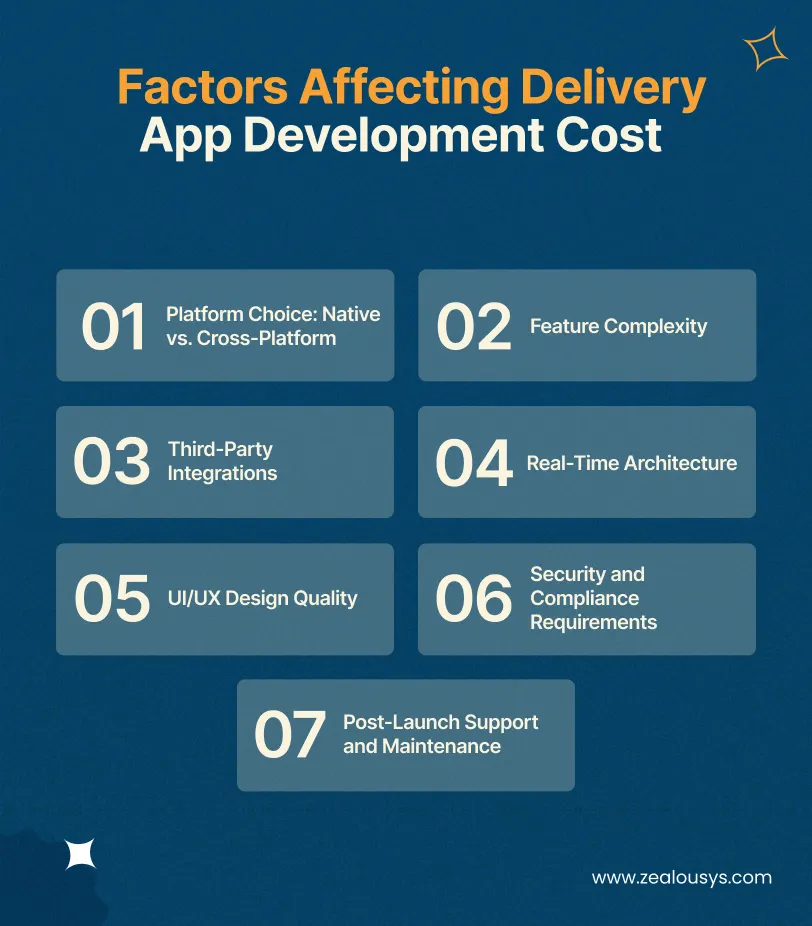
One of the most common questions businesses ask is why two mobile apps can have completely different development costs, even when they appear similar on the surface. The reality is that mobile app pricing depends on multiple technical, business, and operational factors. A simple MVP with limited functionality may cost significantly less, while an enterprise-grade application with AI capabilities, advanced integrations, and high-security infrastructure requires a much larger investment.
Understanding these cost-driving factors helps businesses plan budgets more accurately and avoid unexpected development expenses later in the project lifecycle.
The number and complexity of features directly impact development time and overall app cost. A basic application with login, user profiles, and simple dashboards takes far less effort compared to apps with real-time communication, payment systems, AI recommendations, or advanced analytics.
For example, a simple appointment booking app may require:
Whereas a modern enterprise application may include:
Each additional feature increases:
This is one of the biggest reasons app development costs vary widely across projects.
Most modern mobile apps rely heavily on external systems and APIs. Integrating third-party services adds development complexity because the app must securely communicate with multiple platforms in real time.
Common integrations include:
In Germany, enterprise applications often require integration with existing legacy systems, which can significantly increase development time and architecture complexity.
The more integrations an app requires, the more businesses need to invest in:
Security plays a major role in mobile app development costs, especially in industries like fintech, healthcare, logistics, and enterprise SaaS.
German businesses are particularly focused on:
Apps handling sensitive customer data require additional security layers such as:
Higher security requirements increase both development and ongoing maintenance costs, but they are critical for protecting user data and maintaining regulatory compliance.
Many businesses underestimate the importance of scalability during the early stages of app development. An app designed for a few thousand users requires a very different architecture compared to an application expected to support millions of users across multiple regions.
Scalable mobile applications require:
For startups building MVPs, scalability may not be a top priority initially. However, enterprise applications in Germany often require future-ready architecture from day one to support long-term growth.
Building scalable systems increases upfront development costs but reduces performance issues and expensive re-engineering later.
AI-powered mobile applications are becoming increasingly popular across industries in Germany, especially in healthcare, logistics, fintech, retail, and customer service sectors.
Adding AI features can significantly increase app development costs because they require:
Examples of AI-powered app features include:
AI development involves additional research, testing, model optimization, and cloud infrastructure costs, making these applications more expensive than traditional mobile apps.
Compliance is a major cost factor for businesses operating in Germany and across Europe. Applications handling customer, financial, or healthcare data must follow strict legal and regulatory standards.
Depending on the industry, apps may need to comply with:
Failure to address compliance early can lead to expensive redesigns and legal risks later in the development process.
The platform strategy also affects mobile app development costs. Businesses typically choose between:
Native App Development
Native apps are built separately for iOS and Android using technologies like Swift and Kotlin. They offer:
However, native development usually costs more because two separate codebases are required.
Cross-Platform Development
Cross-platform Frameworks like Flutter and React Native allow developers to use a shared codebase for both platforms.
Benefits include:
Cross-platform apps are often ideal for startups and MVP development, while native apps are preferred for highly complex or performance-intensive applications.
The cost of mobile app development in Germany depends on several factors, including app complexity, features, platform selection, UI/UX requirements, third-party integrations, scalability, and security standards. A simple MVP app for startups may require a smaller budget, while enterprise-grade applications with AI capabilities, cloud infrastructure, and advanced integrations can significantly increase development costs.
Businesses in Germany are also prioritizing GDPR compliance, high-performance user experiences, multilingual support, and scalable architecture, all of which influence the final development budget. Understanding these cost categories helps companies plan their investment more effectively and avoid unexpected development expenses later in the project lifecycle.
| App Type | Estimated Cost | Development Timeline | Best For | Key Features Included |
|---|---|---|---|---|
| Basic MVP App | €15,000–€35,000 | 2–4 Months | Startups & Small Businesses | User login, basic UI, simple backend, push notifications, admin panel |
| Standard Business App | €35,000–€80,000 | 4–6 Months | SMBs & Growing Businesses | Payment integration, APIs, dashboards, analytics, chat, role-based access |
| Enterprise Mobile App | €80,000–€250,000+ | 6–12+ Months | Enterprises & Large Organizations | Advanced security, cloud infrastructure, ERP/CRM integration, AI features, scalable backend |
| AI-Powered Mobile App | €60,000–€200,000+ | 5–10 Months | AI-Driven Businesses | AI chatbot, recommendations, predictive analytics, automation workflows |
| eCommerce Mobile App | €40,000–€120,000 | 4–8 Months | Retail & eCommerce Brands | Product catalog, payment gateways, inventory sync, order tracking |
| Healthcare Mobile App | €50,000–€180,000+ | 6–10 Months | Healthcare Providers | Telemedicine, patient management, HIPAA/GDPR compliance, appointment scheduling |
| FinTech Mobile App | €70,000–€250,000+ | 6–12 Months | Banks & Financial Startups | KYC verification, secure transactions, fraud detection, banking APIs |
| Logistics & Delivery App | €45,000–€140,000 | 4–8 Months | Logistics & Transportation Companies | GPS tracking, route optimization, driver management, real-time updates |
| On-Demand Service App | €50,000–€150,000 | 5–9 Months | Service-Based Businesses | Booking system, live tracking, payments, ratings, notifications |
| Social Media or Community App | €60,000–€180,000 | 6–10 Months | Content & Community Platforms | Messaging, media sharing, live streaming, engagement tools |
Mobile app development costs in Germany are influenced by more than just features and design. Businesses must also consider GDPR compliance, data hosting preferences, multilingual support, enterprise security, and German user expectations. These region-specific requirements can increase development complexity, timelines, and overall project costs.
Planning these factors early helps businesses avoid compliance issues, improve user experience, and build scalable applications for the German market.
Germany follows strict GDPR regulations for apps that collect or process user data. Businesses often need to implement:
Industries like healthcare, fintech, and eCommerce usually require additional compliance layers, increasing development and testing costs.
German businesses often prefer hosting user data within Germany or the EU for stronger privacy and compliance control. This impacts cloud infrastructure and backend architecture decisions.
Popular hosting options include:
Advanced hosting setups may also require backup systems, disaster recovery, monitoring, and high-availability infrastructure, which increase operational costs.
Localization involves more than translating content into German. Apps often require:
German text also affects UI layouts because it usually takes more space than English, requiring additional UI/UX adjustments.
Many German businesses operate across Europe, so apps often need multilingual functionality from the start.
Common requirements include:
Adding multilingual architecture early is more cost-effective than rebuilding the app later for international expansion.
German users typically prefer apps that are:
Businesses often invest more in usability testing, accessibility, and performance optimization to improve user trust and retention.
| UX Expectation | Development Impact |
|---|---|
| Minimal design | More UX refinement |
| Fast performance | Optimization effort |
| Privacy-focused flows | Additional UI logic |
Security is a major priority for German enterprises. Many mobile apps require:
Industries like fintech, healthcare, and logistics usually require advanced security frameworks, increasing backend complexity and testing efforts.
One of the most important decisions businesses face during mobile app development is choosing between native and cross-platform development. The right approach directly impacts your app’s performance, scalability, user experience, development timeline, and overall cost. In Germany’s highly competitive digital market, selecting the right technology stack is critical for building scalable and future-ready mobile applications.
Native app development involves building separate applications for iOS and Android using platform-specific technologies like Swift for iOS and Kotlin for Android. Cross-platform app development, on the other hand, uses frameworks like Flutter and React Native to create a single codebase that works across multiple platforms. Both approaches offer unique advantages depending on your business goals, budget, feature requirements, and time-to-market expectations.
| Factor | Native App Development | Cross-Platform App Development |
|---|---|---|
| Performance | High-performance and optimized apps | Good performance for most business apps |
| Development Speed | Slower due to separate codebases | Faster development with shared code |
| Development Cost | Higher cost | More cost-effective |
| User Experience | Best platform-specific UX | Consistent UI across platforms |
| Scalability | Ideal for large-scale and complex apps | Suitable for startups and MVPs |
| Maintenance | Separate updates for iOS and Android | Easier maintenance with single codebase |
| Device Integration | Full access to device features | Limited access in some advanced cases |
| Security | Strong platform-level security optimization | Secure but framework-dependent |
| Time to Market | Longer launch timeline | Faster deployment |
| Best For | Enterprise apps, fintech, gaming, AI-heavy apps | MVPs, startups, business apps |
Read Also: When to Choose Native vs Cross-Platform Development
Mobile app development costs in Germany vary based on industry requirements, security standards, integrations, and feature complexity. Industries like FinTech, healthcare, logistics, and eCommerce often require advanced infrastructure, compliance management, and scalable architectures, which directly impact development costs and timelines.
Germany’s growing FinTech sector is driving demand for secure digital banking, payment, and investment applications. These apps require advanced security, regulatory compliance, and reliable financial integrations.
Common Features
Estimated Cost
| FinTech App Type | Estimated Cost |
|---|---|
| Basic Payment App | €15,000 – €30,000 |
| Digital Banking App | €30,000 – €50,000+ |
| AI-Powered FinTech Platform | €50,000 – €150,000+ |
Key Insight
FinTech apps usually require strong encryption, compliance with GDPR and PSD2, and secure cloud infrastructure, which can increase development complexity and cost.
Healthcare providers in Germany are investing in telemedicine, patient engagement, and remote monitoring applications. These apps require strong data security and compliance-focused architecture.
Common Features
Estimated Cost
| Healthcare App Type | Estimated Cost |
|---|---|
| Basic Telemedicine App | €10,000 – €25,000 |
| Patient Management Platform | €25,000 – €50,000 |
| AI Healthcare Platform | €50,000 – €120,000+ |
Key Insight
Healthcare app costs often increase due to compliance requirements, security testing, and integrations with hospital systems and medical devices.
Germany’s logistics industry depends heavily on mobile apps for fleet tracking, warehouse management, and delivery optimization.
Common Features
Estimated Cost
| Logistics App Type | Estimated Cost |
|---|---|
| Delivery Tracking App | €10,000 – €25,000 |
| Fleet Management Platform | €25,000 – €50,000 |
| AI Logistics Solution | €50,000 – €120,000+ |
Key Insight
Real-time tracking, cloud scalability, and ERP integrations are major cost-driving factors in logistics app development.
German businesses are increasingly investing in mobile commerce apps that deliver personalized shopping experiences and seamless payment systems.
Common Features
Estimated Cost
| eCommerce App Type | Estimated Cost |
|---|---|
| Basic Shopping App | €8,000 – €20,000 |
| Mid-Level eCommerce App | €20,000 – €45,000 |
| Enterprise AI Commerce App | €50,000 – €125,000+ |
Key Insight
Features like personalization engines, real-time inventory sync, and scalable backend infrastructure can significantly impact development costs.
One of the most common questions businesses ask before starting a mobile app project is: How long does app development actually take? The answer depends on several factors, including app complexity, feature requirements, integrations, security standards, and the development approach. In Germany, businesses often require scalable, GDPR-compliant, and high-performance applications, which can increase overall development timelines compared to basic MVP apps.
A simple mobile app with limited functionality may take only a few months to launch, while enterprise-grade applications with AI features, payment systems, real-time analytics, and third-party integrations can take 6–12 months or longer. Proper planning, clear requirements, and choosing the right development partner play a major role in reducing delays and accelerating time-to-market.
| Development Phase | Estimated Timeline | Key Activities |
|---|---|---|
| Discovery & Requirement Analysis | 1–2 Weeks | Business goals, market research, competitor analysis, feature planning |
| UI/UX Design | 2–4 Weeks | Wireframes, user journeys, app design, interactive prototypes |
| MVP Development | 2–4 Months | Core frontend/backend development, APIs, authentication, essential features |
| Advanced Feature Development | 1–3 Months | AI features, payment gateways, analytics, real-time systems, integrations |
| Testing & Quality Assurance | 2–4 Weeks | Functional testing, security testing, performance optimization |
| Deployment & App Store Launch | 1 Week | App Store/Google Play submission, cloud deployment, release monitoring |
| Post-Launch Support & Optimization | Ongoing | Bug fixes, feature updates, scalability improvements |
| App Type | Estimated Timeline |
|---|---|
| Basic MVP App | 2–4 Months |
| Medium Complexity Business App | 4–7 Months |
| Enterprise Mobile Application | 7–12+ Months |
| AI-Powered or Multi-Platform App | 9–15 Months |
For example, a simple appointment booking app may launch within a few months, while a fintech, healthcare, or logistics application with advanced security, real-time tracking, and AI-powered automation will require a much longer development cycle.
Many businesses focus only on the initial app development cost and overlook important factors like scalability, compliance, user experience, and long-term maintenance. In Germany’s competitive digital market, these mistakes can lead to higher future costs, delayed launches, and poor app performance.
Choosing the cheapest development option may reduce upfront costs, but it often creates scalability and performance issues later. Businesses should build apps with future growth, integrations, and advanced features in mind to avoid costly redevelopment.
Many companies invest in full-scale app development without validating their idea first. Launching an MVP helps businesses test market demand, gather user feedback, and reduce development risks before investing in advanced features.
Germany has strict data privacy regulations. Businesses must include GDPR compliance, secure authentication, encrypted data storage, and privacy-focused architecture from the beginning to avoid legal and security risks.
App development does not end after launch. Ongoing costs such as application maintenance, cloud hosting, security updates, bug fixes, and performance optimization are essential for long-term app success.
Selecting the wrong framework or architecture can impact app performance and scalability. Businesses should choose technologies based on long-term goals, app complexity, and future expansion requirements.
Feature-heavy apps increase development time, complexity, and maintenance costs. Starting with core features and improving the app gradually based on user feedback is often a smarter approach.
German users expect secure, fast, and intuitive digital experiences. Poor UI/UX design, slow performance, or lack of localization can negatively impact engagement and app retention.
Mobile app development costs in Germany usually range from €15,000 to €150,000+ depending on the app’s complexity, features, integrations, and platform selection. A basic MVP may cost around €15,000–€35,000, while enterprise-grade applications with AI, advanced security, and scalable infrastructure can cost significantly more.
Factors such as UI/UX design, backend development, APIs, GDPR compliance, and cloud infrastructure also influence the final project cost.
A simple MVP app can take around 2–4 months to develop, while mid-sized business apps may require 4–8 months. Complex enterprise applications with advanced integrations or AI features can take 9 months or longer.
The overall timeline depends on app complexity, features, testing requirements, app integrations, and development approach.
Yes, Flutter is generally more cost-effective because it uses a single codebase for both Android and iOS platforms. This reduces development time, testing efforts, and maintenance costs compared to native app development.
However, native development may be better for highly complex applications requiring advanced performance or platform-specific features.
Several factors impact app development costs, including app complexity, UI/UX design, backend infrastructure, third-party integrations, security requirements, and platform selection.
Advanced features such as AI, real-time chat, payment gateways, geolocation, and cloud synchronization can significantly increase the development budget.
Mobile app maintenance usually costs around 15%–25% of the original development cost annually. Maintenance includes bug fixes, security updates, server monitoring, performance optimization, and compatibility updates.
Regular maintenance helps improve app security, performance, and long-term user experience.
Yes, building an MVP is often the best approach for startups. It helps validate the business idea, reduce initial investment, gather user feedback, and launch faster in the market.
Once the MVP gains traction, businesses can gradually add advanced features and scale the application.
Yes, outsourcing app development is often more cost-effective than hiring an in-house team, especially for startups and growing businesses. It reduces recruitment, infrastructure, and operational costs while providing access to experienced developers.
A reliable offshore mobile app development partner like Zealous System can also help businesses accelerate development timelines and scale resources efficiently.
Our team is always eager to know what you are looking for. Drop them a Hi!

Raj Kewlani is a Project Manager and Mobile & Open Source Development Lead at Zealous System, specializing in agile-driven digital solutions. He focuses on delivering high-quality mobile apps and open-source projects that align with business goals.


Comments